Explainer 10 · Saving Water
Saving water at home in the UAE without giving up comfort
Small fittings and steady habits do most of the work. Here is what each change involves, what it costs you in effort, and where to start.
The short version
- Aerators and flow restrictors reduce flow at the tap without changing how the water feels for most tasks.
- A dripping tap or a silently leaking cistern wastes water continuously, so fix those before buying anything new.
- Reverse osmosis reject water can be collected for mopping and hardy plants, but not for drinking or cooking.
- Watering early or late reduces evaporation, and a fixed weekly check keeps small leaks from becoming long ones.
This guide is for tenants and owners in UAE flats and villas who want to use less water without a renovation. It explains the small fittings that reduce flow, the repairs worth doing first, how to reuse water your purifier already sends to the drain, and which habits a busy household can realistically keep. Read it before you buy gadgets or book a plumber, so you spend on what matters.
Start with leaks, because they waste water around the clock
A tap that drips once a second never stops. A toilet cistern with a worn seal can refill quietly all night, and you may hear nothing at all. These are the cheapest savings available, because you are removing waste rather than reducing something useful.
Three checks take a few minutes:
- Taps and shower heads: look for drips with everything switched off, including the spout under the kitchen sink and the outdoor tap.
- Cisterns: put a few drops of food colouring in the cistern, wait without flushing, then look at the bowl. Colour appearing means water is passing the seal.
- The meter: note the reading, use no water for an hour, then read it again. Movement suggests a leak somewhere in the pipework.
In a flat, the supply line and any shared tank usually belong to the building, so report suspected leaks to management rather than opening things yourself. Our explainer on how water reaches your tap in a UAE building shows where your responsibility normally begins and ends. In a villa, a plumber can trace a hidden leak properly. Washers and cistern seals are inexpensive parts; the cost is mostly labour.
Aerators and flow restrictors change the feel of the tap, not the result
An aerator is the small mesh fitting screwed onto the end of a tap spout. It mixes air into the stream, so the water feels soft and full while less passes through. A flow restrictor is a simple insert that narrows the passage and limits how much water can flow at a given pressure. Some aerators include one.
Fitting is straightforward. Unscrew the old aerator by hand or with a cloth to protect the finish, note whether the thread is male or female, and match the size when buying. Take the old part to the shop if you can. Rinse the mesh every month or two, because grit and scale collect there. If you already notice white deposits on your taps, our guide to limescale on taps, glass and kettles explains why they form and how to clean them gently.
Two cautions. Very low flow can make a mixer tap harder to balance, and instant water heaters sometimes need a minimum flow to switch on, so check the heater's instructions before restricting the hot side. Keep the flow generous where you fill pots and buckets; speed matters more than saving there.
Dual-flush cisterns give you a choice at every flush
A dual-flush cistern has two buttons or two positions on one lever: a shorter flush for liquid waste and a longer one for solids. Older single-flush cisterns release the same full volume every time. Many modern cisterns also let you adjust the float or the flush valve so each release uses less water.
If you are replacing a cistern mechanism anyway, ask your plumber about a dual-flush conversion kit suited to your pan, since fittings differ between models. Teach everyone in the house which button does what, including children and guests. The saving depends entirely on people using the short flush when it is enough, so a quiet word to the family does more than the hardware alone.
Purifier reject water is useful, just not for drinking
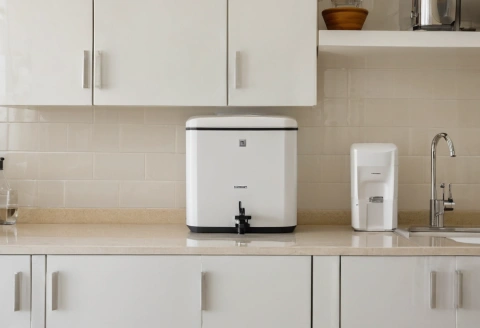
A reverse osmosis unit separates water into a purified stream and a concentrate stream that carries away the rejected salts. That concentrate, often called reject water, normally runs to the drain. It is not drinking water, but it is perfectly serviceable for mopping floors, wiping outdoor surfaces, flushing a toilet by pouring it into the bowl, or watering hardy ornamental plants.
If you want to understand where that stream comes from, we describe how a household reverse osmosis unit works stage by stage. To collect the reject water, place a covered bucket or container under the cabinet and route the reject tube into it, or ask your installer about a proper collection point during servicing. Empty the container daily so it never overflows, and keep it labelled and out of reach of children.
Because the concentrate holds more dissolved salts than the feed water, avoid using it on seedlings, sensitive potted plants or anything edible. Alternate it with ordinary watering so salts do not build up in the soil. Never use it for cooking, brushing teeth, washing dishes or pets' bowls.
Water the garden when the sun cannot steal it
In the UAE heat, water sprayed at midday largely evaporates before roots drink it. Irrigate in the early morning or after sunset instead. Morning is generally kinder to foliage, because leaves dry quickly and fungal problems are less likely than with overnight wetness.
Deep, less frequent watering encourages roots to grow down where moisture lasts, while light daily sprinkling keeps roots shallow and thirsty. Drip lines placed at the root zone lose far less than sprays thrown across paving. Check emitters monthly for blockages and splits, mulch beds to slow evaporation, and group plants with similar thirst together. After windy days, walk the line: a knocked emitter can pour water onto bare ground for weeks unnoticed.
Habits a family can actually keep
Complicated rules fail within a fortnight. Choose a few actions that fit existing routines and stick to them:
- Turn the tap off while brushing teeth, soaping hands and scrubbing dishes; run it to rinse.
- Keep a jug of drinking water in the fridge instead of running the tap until it cools.
- Run the washing machine and dishwasher with full loads rather than half loads.
- Take shorter showers, and use the shower's pause button if it has one while lathering.
- Collect the cold water that runs before the shower warms up, and use it for plants or cleaning.
- Sweep balconies and paths instead of hosing them.
Agree the list together, put it somewhere visible for a month, and let each person own one item. Habits survive when they are shared, not imposed.
What to do this week
- Walk the home with everything off and note every drip, stain and running cistern. Book one plumber visit for the whole list.
- Unscrew one aerator, check its size and condition, and replace or clean it. Then do the rest.
- Set up a labelled container for purifier reject water and decide who empties it each day.
- Shift irrigation to early morning or evening, and inspect every emitter.
- Read your meter, write the figure down, and compare it at the same time next month to see whether your changes show.
If readings stay high despite these steps, ask your building management or a licensed plumber to investigate the supply side. Savings you can measure are the ones worth keeping.
General information for households, not professional, medical or legal advice. Read how we work in the editorial policy, or report an error.