Explainer 1 · Filters Explained
How an under-sink reverse osmosis unit works, stage by stage
A plain walk through the cartridges, membrane and tank inside a kitchen RO unit. It ends with the questions worth asking before anyone drills your worktop.
The short version
- An under-sink RO unit treats only the tap it is connected to, in stages: sediment prefilter, carbon block, membrane, then a post filter.
- The membrane splits the flow into treated water and a reject stream that carries the removed salts away to the drain.
- A storage tank holds treated water so the tap flows properly, because the membrane produces water slowly.
- Before installing, check cabinet space, feed pressure, drain access, cartridge availability and who will service the unit.
This guide is for tenants and owners in UAE flats and villas considering a reverse osmosis unit for the kitchen who want to understand it before agreeing to anything. It follows the water through each stage, explains why part of the flow goes down the drain rather than into your glass, and lists the questions worth putting to a supplier or landlord first.
What an under-sink reverse osmosis unit actually does
Reverse osmosis, usually shortened to RO, pushes water through a very fine membrane that lets water molecules pass while holding back most dissolved salts and other small particles. The unit sits in the cabinet beneath the kitchen sink and feeds a separate small tap, so it treats drinking and cooking water only. Showers, basins and the washing machine carry on using the ordinary supply. If you are still weighing up where filtration belongs in your home, our comparison of whole-house filters versus point-of-use filters in a villa sets out the difference in plumbing terms.
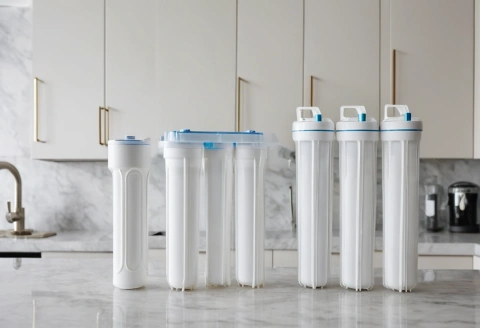
An RO unit is not a single filter but a short production line. Each stage protects the next, and the order matters. Water arrives from the cold supply, passes through the prefilters, reaches the membrane, collects in a tank, and gets a final polish on its way to the tap.
The stages in order, and what each one is for
Sediment prefilter
The first cartridge is a coarse barrier for sand, rust flakes, silt and any grit picked up on the journey from the mains. In many UAE buildings that journey includes a ground or rooftop tank and long pipe runs, so the water arriving at your cabinet is not always identical to the water leaving the utility. Our explainer on how water travels from the mains to the tap in UAE buildings and villas covers those steps. The sediment cartridge exists mainly to stop particles reaching the delicate parts downstream.
Carbon block
The second stage is a compressed block of activated carbon. Carbon adsorbs chlorine and many of the compounds responsible for taste and smell. This matters for more than flavour: the membrane material in most domestic units is sensitive to chlorine, so removing it here helps the membrane last. A carbon block also catches some fine particles the sediment cartridge missed.
The membrane
This is the working heart of the system. Feed water is pressed against a tightly wound sheet of semi-permeable membrane. Water molecules cross it; dissolved salts, metals and most larger molecules do not, and are swept away in a separate stream. Membranes work slowly and need reasonable pressure behind them, which is why some units include a small booster pump and why weak supply pressure can mean a disappointing trickle at the tap.
Storage tank
Because the membrane produces water gradually, treated water collects in a sealed pressurised tank, often tucked beside the cartridges. Inside, a flexible bladder separates water from air. As the tank fills, air pressure builds; when you open the RO tap, that pressure pushes water out at a usable flow. Without the tank, you would be waiting on the membrane drop by drop.
Post filter or remineralising cartridge
Water leaving the tank passes through a final carbon cartridge to freshen taste after storage. Some units add a remineralising stage, which passes water over mineral media to return a small amount of calcium and magnesium and lift the flat taste that very low-mineral water can have. Whether you want that stage is a matter of preference. Anyone with a specific dietary or health reason for choosing one should take advice from a qualified professional rather than a sales pitch.
Why some water goes to the drain
This surprises people, so it is worth being clear. The membrane cannot store the salts it rejects. If they were left sitting on its surface, it would clog and stop working. So the unit keeps a continuous flow running across the membrane face, flushing those concentrated salts away through a small tube connected to the waste pipe under the sink. That flow is called reject or concentrate water, and it goes to the drain even while the tank fills.
The proportion varies with feed pressure, water temperature, how full the tank is and the design of the unit. Warmer water and good pressure generally help. A unit that runs constantly, or drains long after the tank should be full, may have a faulty shut-off valve or a worn membrane, and that is worth investigating rather than ignoring.
Reject water is not sewage, but it is more concentrated than your tap water, so it is not suitable for drinking. Some households route it to a bucket for floor cleaning or plant pots that tolerate harder water; our notes on saving water at home in the UAE discuss reuse ideas alongside simpler savings such as fixing drips.
Questions to ask before you install one
Most disappointments with kitchen RO come from things nobody checked beforehand. Work through this list with the supplier, and with your landlord if you rent:
- Space: measure the depth, width and height of the cabinet with the bin and plumbing in place, then compare against the unit and tank dimensions. Ask whether the tank can lie on its side if the maker allows it.
- Feed pressure: ask what pressure the unit needs, whether your supply meets it, and whether a pump is included or extra.
- Drain connection: confirm there is a suitable point on the waste pipe for the reject line, fitted above the trap so nothing can siphon back.
- Tap and worktop: ask where the drinking tap will sit, whether a hole is needed, and whether your landlord permits drilling stone or steel.
- Cartridges: ask which sizes the unit uses, how easily they are sourced locally, and the maker's replacement intervals for each stage.
- Servicing: ask who sanitises the tank and lines, how often, and what a membrane replacement involves.
- Permissions: in a rented flat, get written agreement before any alteration to plumbing or cabinetry.
If a kitchen refit is on the horizon, plan the cabinet around the unit rather than squeezing it in afterwards. Our guide to planning the space under the kitchen sink for a purifier explains what to allow for.
Practical next steps
- Look at your water first. Fill a clear glass, let it stand, and note any cloudiness, sediment or smell. Persistent discolouration or odour points to a building issue that a kitchen filter will not fix, so raise it with the building manager.
- Measure the empty cabinet and photograph the pipework and waste trap. Take these to any supplier conversation.
- Ask two suppliers the same questions from the list above and compare the answers, especially on pressure, drain access and cartridge supply.
- Agree the installation scope in writing, including the tap position, the drain connection and who tests for leaks after fitting.
- Diarise the first cartridge changes as soon as the unit is installed, and keep the model numbers somewhere you can find them. A simple filter change calendar for a family home makes this easier to keep up.
General information for households, not professional, medical or legal advice. Read how we work in the editorial policy, or report an error.